Making a lamp
From broken branches to patterned light.
The progression of my lamps, from natural branches to geometric forms, and the idea behind them: bringing light into the world from places too often reduced to stereotypes.
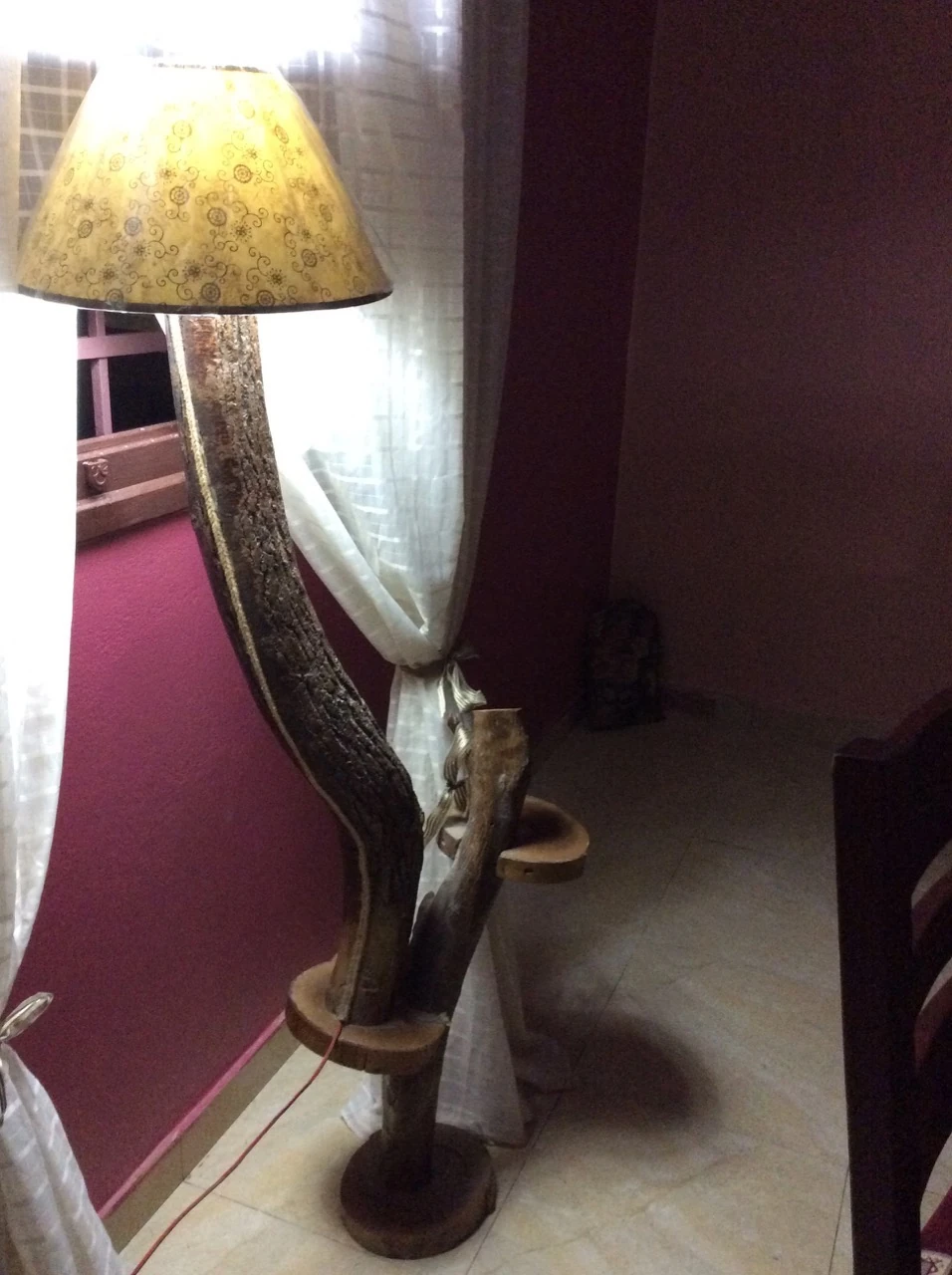
I began making lamps with broken branches. Before the patterned boxes and the experiments with different finishes, there was the shape of the wood itself: bark, grain, bends, and an irregular piece of a tree that could become useful again.
The natural-branch lamp below belongs to that part of the work. Its curve remains the structure of the lamp. The bark stays visible. Small slices of wood become shelves. The tree still has a presence in the finished object.
Light from places people misread
The early work used broken olive-tree branches. I bought wood from farmers and worked with a local carpenter to prepare it, shape it, and make room for the electrical circuit. Working the wood released its natural oils. Its density and unpredictability demanded patience; the material could be hard on tools as well as on the person using them.
The place those branches came from was burdened by stereotypes. So many regions reach the outside world mainly through images of conflict, danger, and destruction. I wanted to bring light into the world from those places: something made with skill and care that another person could welcome into a home.
The thought behind the lamps was simple:
From destruction, we are sending light out into the world.
Turning a broken branch into a lamp gave that thought a physical form. The wood could carry its history and still become a source of warmth and beauty. I wanted the object to create an opening for curiosity about the place it came from and the people capable of making it.
That intention has stayed with me. People living through difficult circumstances still have things to invent, build, and contribute. Their surroundings should not set the limit on what the rest of the world is willing to see in them.
The lamps over time
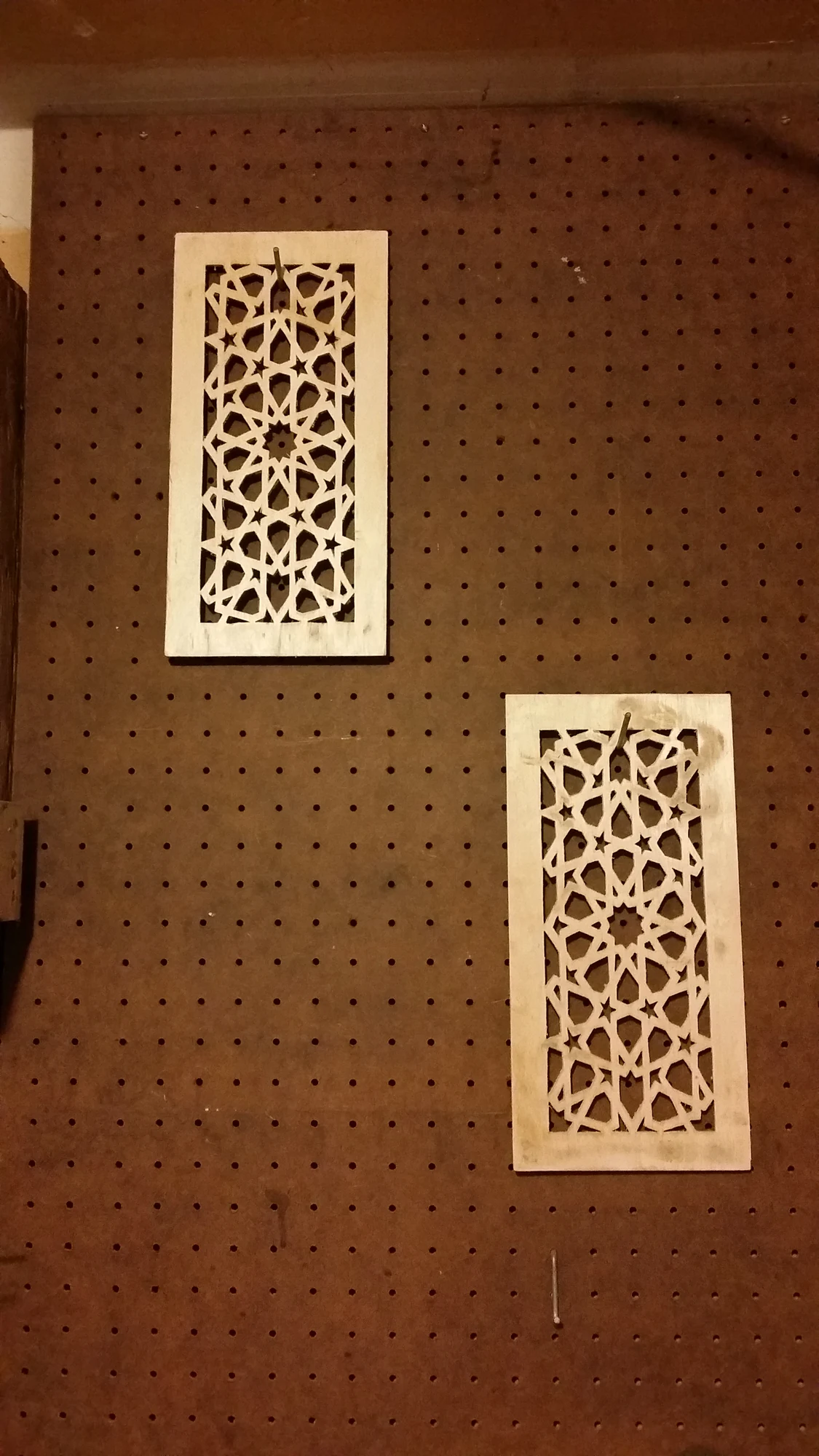
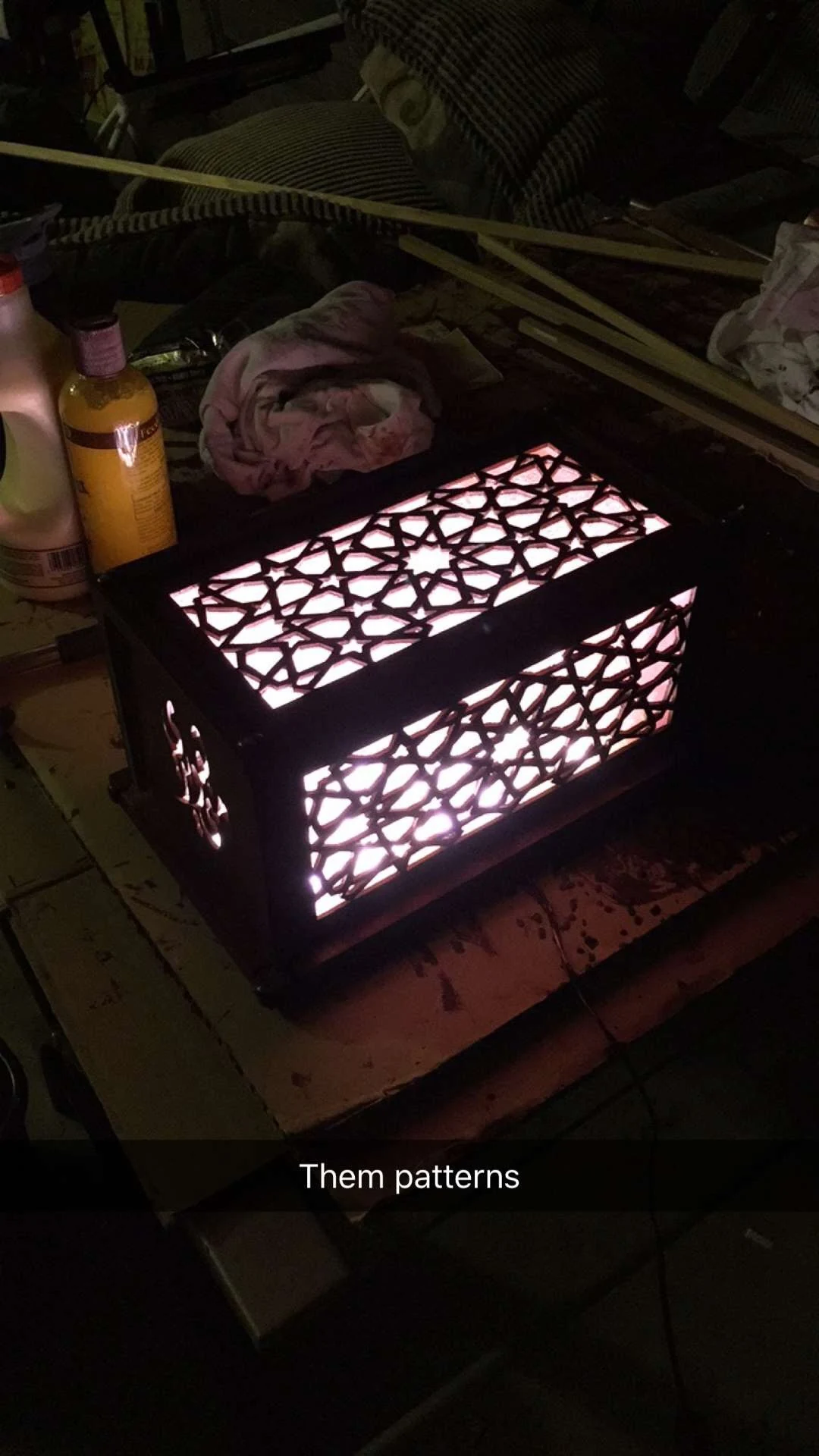
Over time, I moved from working around the natural shape of a branch to building forms from patterned wooden panels. Repeating stars and interlocking lines gave me another way to work with light. I could change the proportions, combine panels, try a different finish, and see how each decision changed the object in a room.
These photographs show that later progression. The unfinished boxes and crowded worktable belong in the story too.
Cut panels
Light through the pattern
A family of forms

A different finish

Photographs from my archive. Dates refer to the photographs, not necessarily the date each lamp was made; the 2016 image uses its archive date. Select a photograph to view it larger.
By 2019, I had built close to thirty prototypes and explored more than twenty-five variations in size, finish, assembly, and control. Some could be controlled from a phone or through a home-automation system. The work had traveled a long way from the broken branches, while the original wish to send light out into the world remained.
The material has a say
Working with branches made the material’s influence especially visible. Every curve changed what I could build. With the later panel lamps, I could repeat a pattern more deliberately, but the wood, the joints, and the light still had to work together. The lamp had to stand, illuminate a space, and be something someone wanted to live with.
That specificity is part of the pleasure. A particular piece of wood becomes a particular object. Its value can lie in the care taken with it, the feeling it brings to a room, or the conversation it starts.
What I wanted the light to carry
Looking at the lamps together, I can see the progression in my tools, designs, and ambitions. I can also see a steady purpose underneath it: finding possibility in material that had been broken, and making something that could change how another person felt or what they were willing to notice.
I wanted the places behind that work to be known for what they could give to the world. A lamp was one small, tangible way to begin. Broken branches could become light in someone else’s home.
This piece develops a personal argument or practice. Its proposals are offered for examination, not presented as empirical findings.
Notebook · Published 2026-11-02
Editorial method & provenance
Responses & questions.
What am I missing? Share a correction, counterargument, or relevant experience.
Loading responses…
Add a public comment
Send me a private note about this article
About: Making a lamp